
 By Jess Martin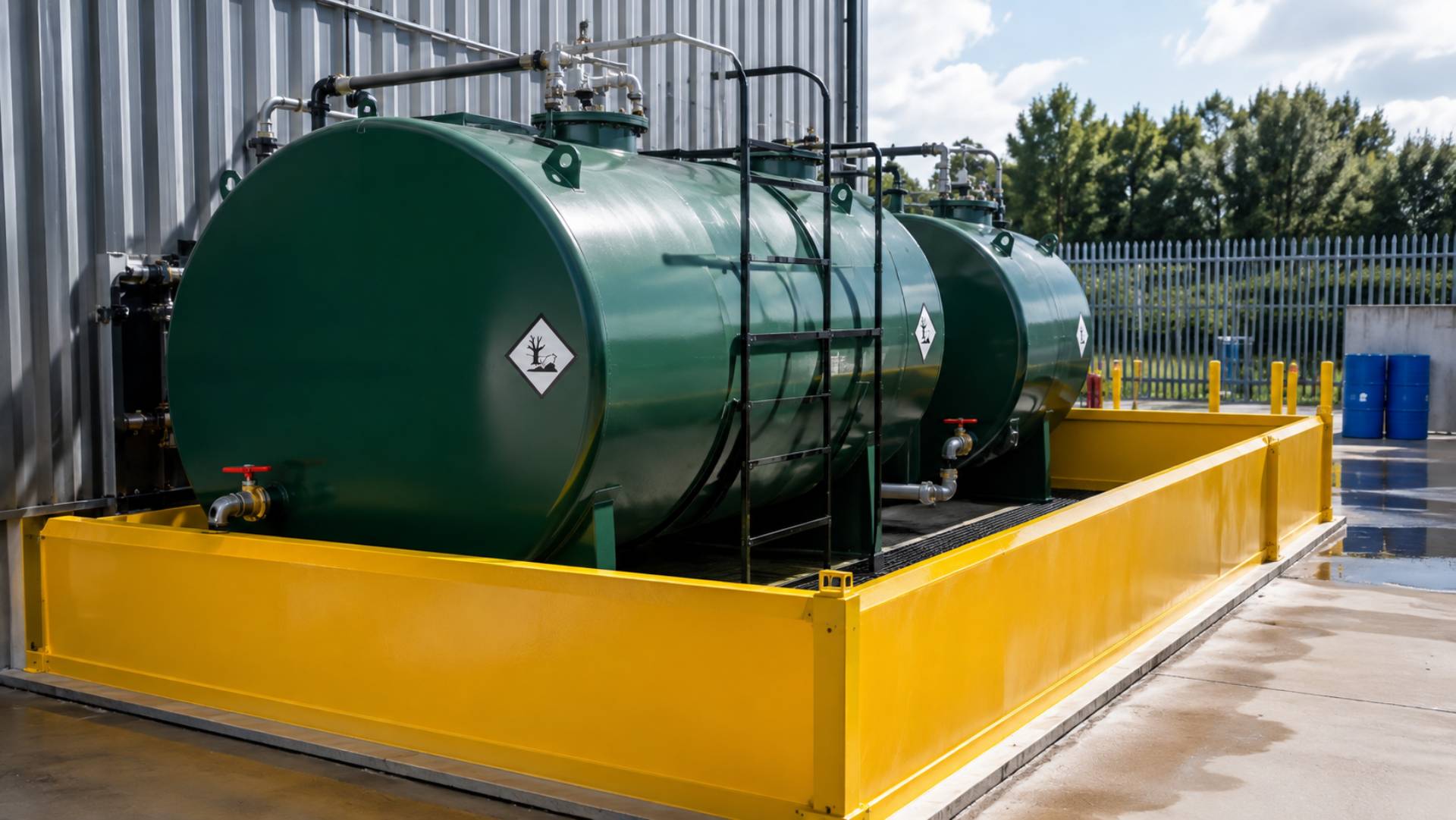
When it comes to storing oil, fuel or other hazardous liquids, businesses have a legal responsibility to prevent those substances escaping into the environment. One of the most important tools for meeting that responsibility is bunded storage, a form of secondary containment that has become one of the key compliance requirements for industrial and commercial sites across the UK.
What Is Bunded Storage?
Put simply, bunded storage means housing a tank or drum within a secondary barrier, or bund, capable of holding the contents if the primary container fails.
Rather than relying on a single layer of protection, bunding gives you a fallback that contains a leak or spill on site and stops it reaching drains, watercourses or soil.
Why does this matter? Oil and fuel spills aren’t just costly to clean up; they can cause lasting environmental damage and result in significant penalties for the business responsible. Under the Control of Pollution (Oil Storage) (England) Regulations 2001 and equivalent legislation across Scotland, Wales and Northern Ireland, businesses storing more than 200 litres of oil at a commercial or industrial site are generally required to provide suitable secondary containment.
Compliance is more than a paperwork issue, too. The Environment Agency can and does serve anti-pollution works notices requiring a site to be brought up to standard, alongside the possibility of fines or prosecution.
How Much Containment Is Required?
The standard commonly referred to as the 110% rule sits at the heart of most bunding requirements. In practice, a bund must be capable of holding 110% of the capacity of the largest container it protects, or 25% of the total combined storage on site, whichever figure is greater. The additional 10% accounts for factors such as rainwater ingress or the practicalities of a real spill, rather than assuming a perfectly clean, complete transfer of contents.
If a business is storing multiple containers, such as several drums or IBCs, the onus is on them to work out the correct bunded storage capacity by calculating both figures and applying whichever is larger, rather than assuming a single fixed number applies universally.
Location and Construction Considerations
Regulations address more than containment; they also cover where containers are sited. Positioning near watercourses, drains or boreholes increases the risk of environmental contamination if a spill does occur, so guidance generally recommends keeping oil storage tanks a reasonable distance away from these features.
Bunds themselves also need to be impermeable to the substance being stored, with no unsealed outlets that could allow a spill to bypass the containment entirely.
For flammable liquids specifically, additional guidance such as the HSE’s HSG51 sets out further requirements around storage, ventilation and fire safety, reinforcing that bunding is part of a wider safety plan rather than a standalone fix.
Getting It Right
Given how specific the requirements are, businesses that need to meet containment regulations often work with specialist suppliers of bunded storage equipment rather than attempting to retrofit compliance onto existing containers after the fact. Getting the specification right from the outset means the correct bund capacity, suitable materials and appropriate positioning are all in place from day one, which is far more straightforward than closing a compliance gap once it’s already been identified.
Bunded storage isn’t just a box to tick for compliance. Done properly, it protects the environment, protects the business from significant financial and reputational risk, and stops a single equipment failure turning into a much more serious incident.